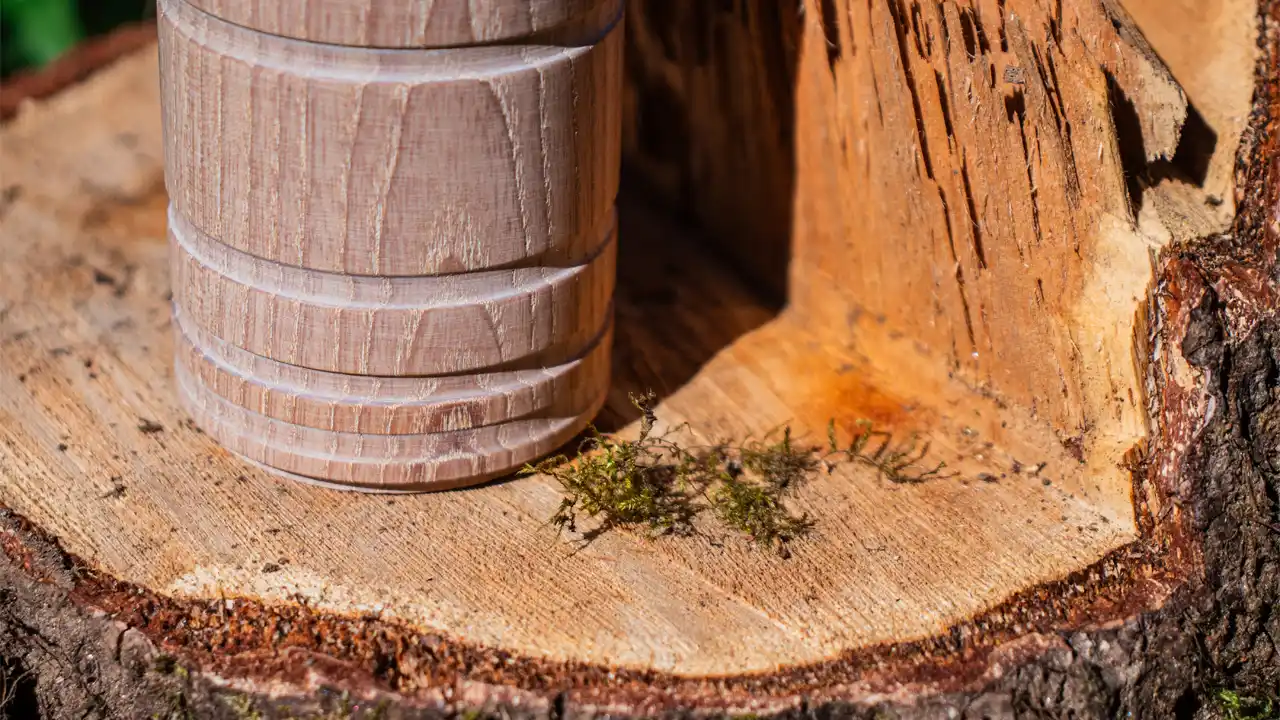
Sustainable craftsmanship begins with the selection of wood and ends in the homes of those who purchase the products.
We live in an era dominated by furniture and utensils made with low-quality materials by huge multinationals whose factories are located thousands of miles away. These products lack personality, their manufacturing and transportation processes are highly polluting, and they have an extraordinarily short lifespan.
In fact, the carbon footprint of large companies is one of the factors that hinders the fight against the climate crisis.
In the face of this predatory model that ignores the importance of caring for natural resources and making the most of the best raw materials, at Atalanta we champion sustainable craftsmanship. What does it consist of? How can sustainable craftsmanship be achieved? Is it possible to apply sustainability to the entire process of creating a piece?
In this article, we tell you the formula we follow at Atalanta to design, turn, and market 100% sustainable craftsmanship.
Local and certified wood
To create sustainable handcrafted products, we must begin by carefully selecting the wood we will use as raw materials.
In the Atalanta workshop, we strive to use wood from our immediate surroundings. Zero-mile raw materials allow us to work without having to resort to materials originating in distant territories, whose transportation generates pollution.
We are extremely fortunate to have excellent wood just steps from our workshop. Why would we import it from other places and cause more pollution with its transportation?
Furthermore, in many cases, when making small pieces, we use wood from pruning or wood that, due to its size, cannot be used in other industries and would be discarded. So, thanks to our craft, we give it life and a purpose.
But our work of utilizing all the wood doesn’t end there. With the leftover wood from turning, we make even smaller pieces. This way, we can generate the least amount of waste possible and, above all, make the most of all the virtues of such a special raw material as wood.
We should also emphasize that the wood we use comes from certified sustainable logging operations. Our ancestors harvested wood for centuries without harming the forest; we follow their example. We want our environment to remain the same for many centuries to come. Our footprint cannot be deforestation, but rather a sustainable relationship with nature.